AI-Powered Development: How We Build AI Applications in a Day for Banks
1. Why the traditional project Cycle no longer worksArtificial Intelligence has its own language. And it's evolving fast.
The problem is neither technical nor budgetary. It is structural.
An AI project in banking, as it is usually conducted, relies on : the business expresses a need, IT translates it into specifications, a firm develops a proof of concept, it's evaluated, then deployed. This sequence is inherited from the waterfall model — perfectly rational for a regulatory reporting project (where the need is fixed and predictable), but where the need often becomes clearer during implementation.
Let's take a concrete example. A credit team at a financing bank wants "an AI assistant to analyze files." The specifications drafted in February describe a tool that "automatically generates Credit Memos from financial statements." Six months later, at the demonstration, everyone realizes that the most useful component is actually missing: . No one had thought of it during the scoping phase — but when you see the application running, it becomes obvious.
: the project is redone, taking another six months, and the initial ambition gets diluted by fatigue.
We've seen this scenario unfold many times. It explains why so many AI projects in banking get bogged down at the PoC stage: . Not because the teams are bad — but because the right question only emerges once the prototype exists.
If you are a CDO, CFO, or AI project manager: stop commissioning detailed specifications before seeing a prototype in action. First, invest in a rapid exploration phase of 1 to 5 days, delivering real applications. The real specifications will come later.
2. Our conviction: start with the business pain point, not the technology1. LLM (Large Language Model)
The best AI projects don't start with "we want to do RAG." They start with "our credit analysts spend 4 hours per file on document synthesis — 2 of which are just extracting figures from financial statements."
This is a radical shift in approach. By starting with the business problem — not the tool — you ensure that the envisioned solution will have:
- • A natural sponsor (the one experiencing the problem)
- • Measurable ROI (the time or money saved)
- • High acceptance (no one disputes a tool that addresses a real need)
-
Specifically, in our workshops, we never talk about LLMs, RAG, or vector stores in the first 90 minutes. We discuss what consumes teams' time, what frustrates them, what keeps them working late, and what, when it fails, prompts a call from a supervisor or regulator.
From the last 10 sessions we've facilitated, the most frequently reported pain points are:
- • Searching for information in unstructured documents (contracts, reports, procedures)
- • Manual consolidation of disparate Excel data
- • Drafting regular summaries (Credit Memos, committee notes, project summaries)
- • Reconciling reference data (customers, products, third parties)
- • Detecting discrepancies and anomalies in voluminous reports
-
Unsurprisingly, these are exactly the use cases where generative AI brings the most value — but they are only identified if we start from the business needs.
The "so what"
Try this exercise this week: ask your teams to list the 3 tasks that consume most of their time without creating value. You'll have your priority AI pipeline. No need for a six-month audit.

3. A six-step method, not six months2. Embeddings
Our AI-Powered Development method is built around six steps. These can be completed in a single day for a quick framing, or over a few weeks for a more structured program.
1. Identify — map out business pain points, repetitive tasks, and time sinks. Goal: to generate a list of 15-30 potential candidates in less than 2 hours.
2. Prioritize — rank candidates along two axes: business value (time saved, quality gained, risk reduced) and AI feasibility (available data, technical complexity, regulatory constraints). A simple 2-dimensional table allows us to keep only the 3 to 5 priority cases.
3. Design — describe each selected use case in natural language. No technical specifications. A 5-10 sentence text that answers: what should the application do? What data does it consume? What is the expected deliverable? This step takes 15 minutes per case — and replaces the classic 3 weeks of writing a requirements document.
4. Develop — quickly build a functional prototype. This is where our Prime AI Fast Development Kit comes in (see below). The goal: to have an application that meets the need in a few hours, not a few weeks.
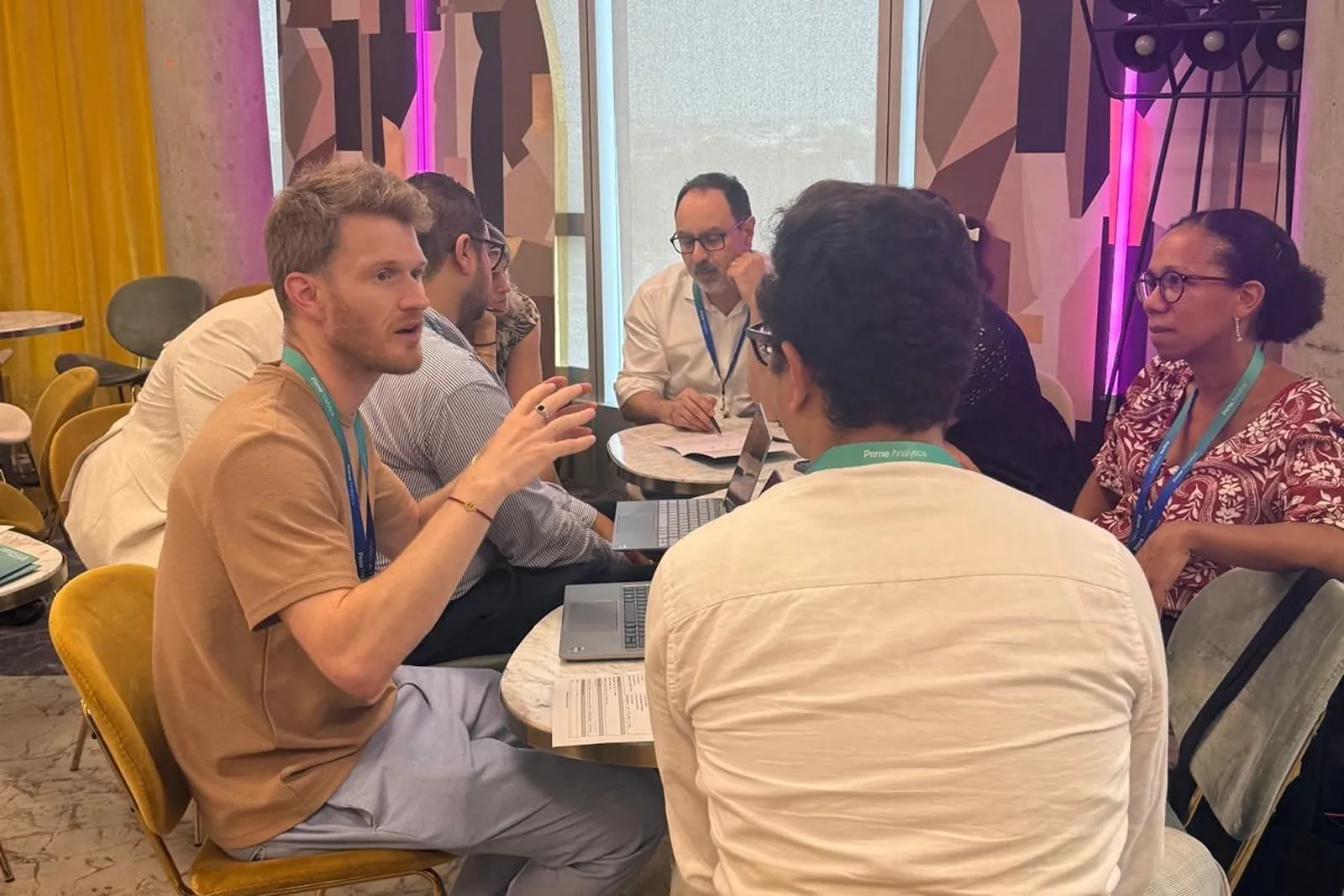
5. Validate — test immediately with business users. In session. They click, they test, they challenge. We correct live. The need is refined through use, not through specifications.
6. Industrialize — prepare for production rollout. Security, governance, monitoring, integration into the IS. This is the longest phase (2 to 6 months depending on complexity), but it starts with a validated prototype — so there's no risk of starting from scratch.
The "so what"
If you are starting an AI project: require your teams to complete steps 1-4 in 5 business days, not 5 months. The worst that can happen is that you have a prototype to discard — which is always better than a specification to rewrite.
4. Prime AI Fast Development Kit: the engine that makes it possible3. RAG (Retrieval-Augmented Generation)
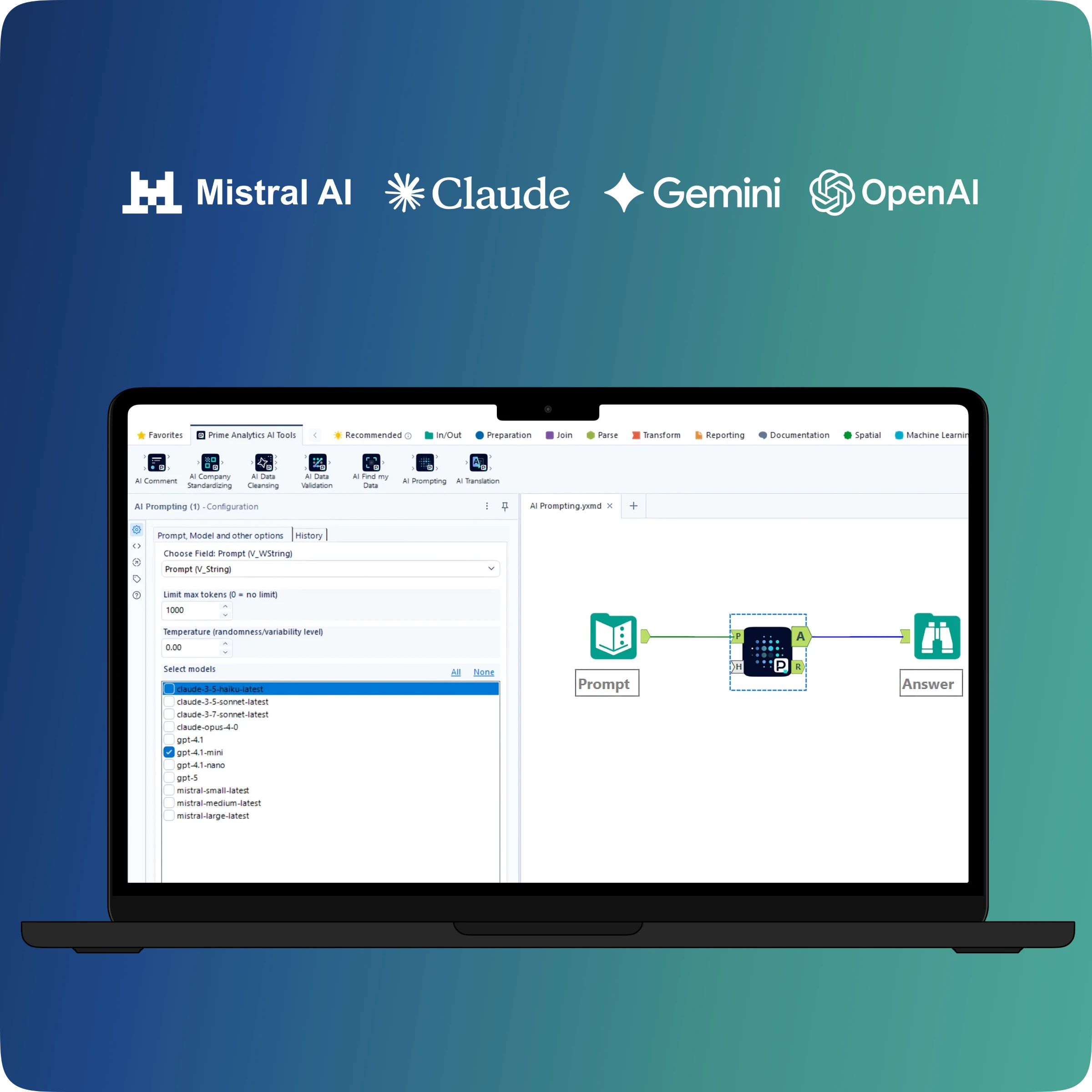
What makes the method practical is a technical foundation we have built and tested with several banking clients: the Prime AI Fast Development Kit (Prime AI FDK).
It is a rapid development platform compatible with the requirements of financial institutions. It natively integrates:
- • Security — access management, secrets, multi-environment credentials (dev, staging, prod). Compatible with SecNumCloud and GDPR policies.
-
- • AI — AI agents, RAG (Retrieval-Augmented Generation), document generation. LLM-agnostic: Mistral, OpenAI, Claude, Gemini, self-hosted internal models.
-
- • Data — multi-source connectors and integration: SQL databases, data warehouses (Snowflake, Databricks), Alteryx, Excel, PDF, REST APIs.
-
- • Development — reusable libraries and components: agent templates, ingestion patterns, test frameworks.
-
- • Industrialization — Git, CI/CD, automated deployment, versioning, rollback.
-
-
Concretely, what Prime AI FDK changes: instead of 60% of an AI developer's time being spent on setting up the environment (auth, connectivity, test framework, containerization), it is dedicated to business value creation (agent logic, prompts, business rules, UX).
A quantified example: for a Credit Memo use case for a financing bank, classic development takes 4-6 weeks. With Prime AI FDK, the prototype is available in 2 days. The difference isn't in the magic of AI — it's in the fact that everything not core to the business is already pre-wired.
The "so what"
Don't develop your AI stack from scratch for every project. Whether you use Prime AI FDK, LangChain, LlamaIndex, or an equivalent platform, the important thing is to have a reusable foundation that handles 60% of the technical plumbing. Otherwise, your time-to-value will remain several months per project.
5. What concretely changes for business4. Agentic AI / Agentic AI
AI-Powered Development is not just a technical acceleration. It's a shift in approach in the relationship between business and IT.
Before: the business team writes a 40-page requirements document. They wait 3 months. They receive a prototype that meets 60% of the need. They write a correction ticket. They wait another 2 months.
After: the business team interacts directly with the AI teams during the session. They see the application evolve in minutes. They correct course in real-time. The requirements document disappears — it is replaced by direct conversation with a living prototype.
This shift also changes the project's social dynamics. The business team is no longer a client of a requirements document — it becomes a co-designer of an application. Responsibility is shared. Commitment intensifies. And most importantly, the final solution is accepted much more easily because it was shaped with those who will use it.
The "so what"
If you are a CIO or an AI program manager, the question to ask business teams is no longer "what are your requirements?" — but "are you available for 4 hours this Thursday to co-build a prototype?". A simple change in scheduling transforms the project dynamic.

6. A real-world example: the AI & Credit Masterclass on June 23, 20265. Orchestrator
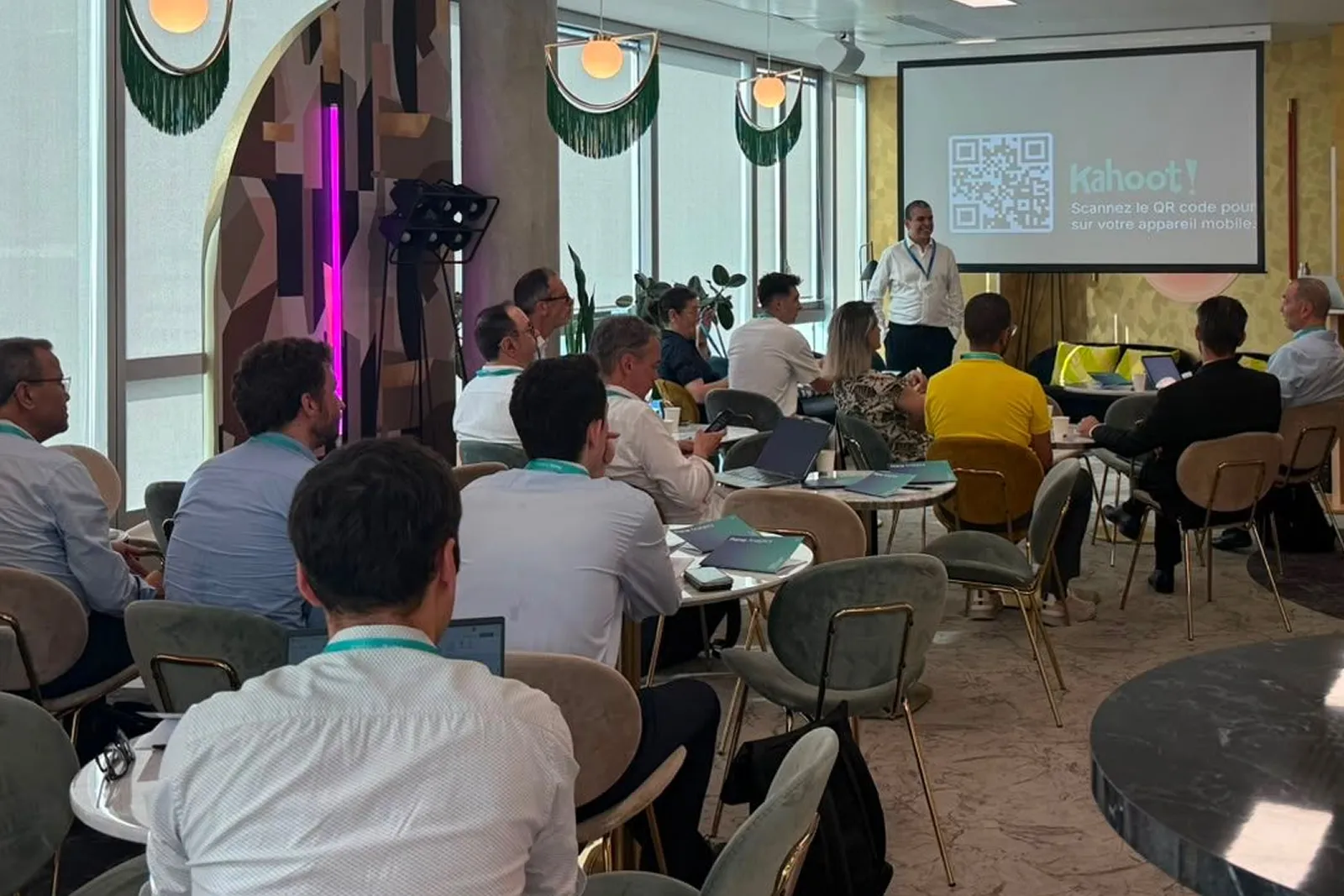
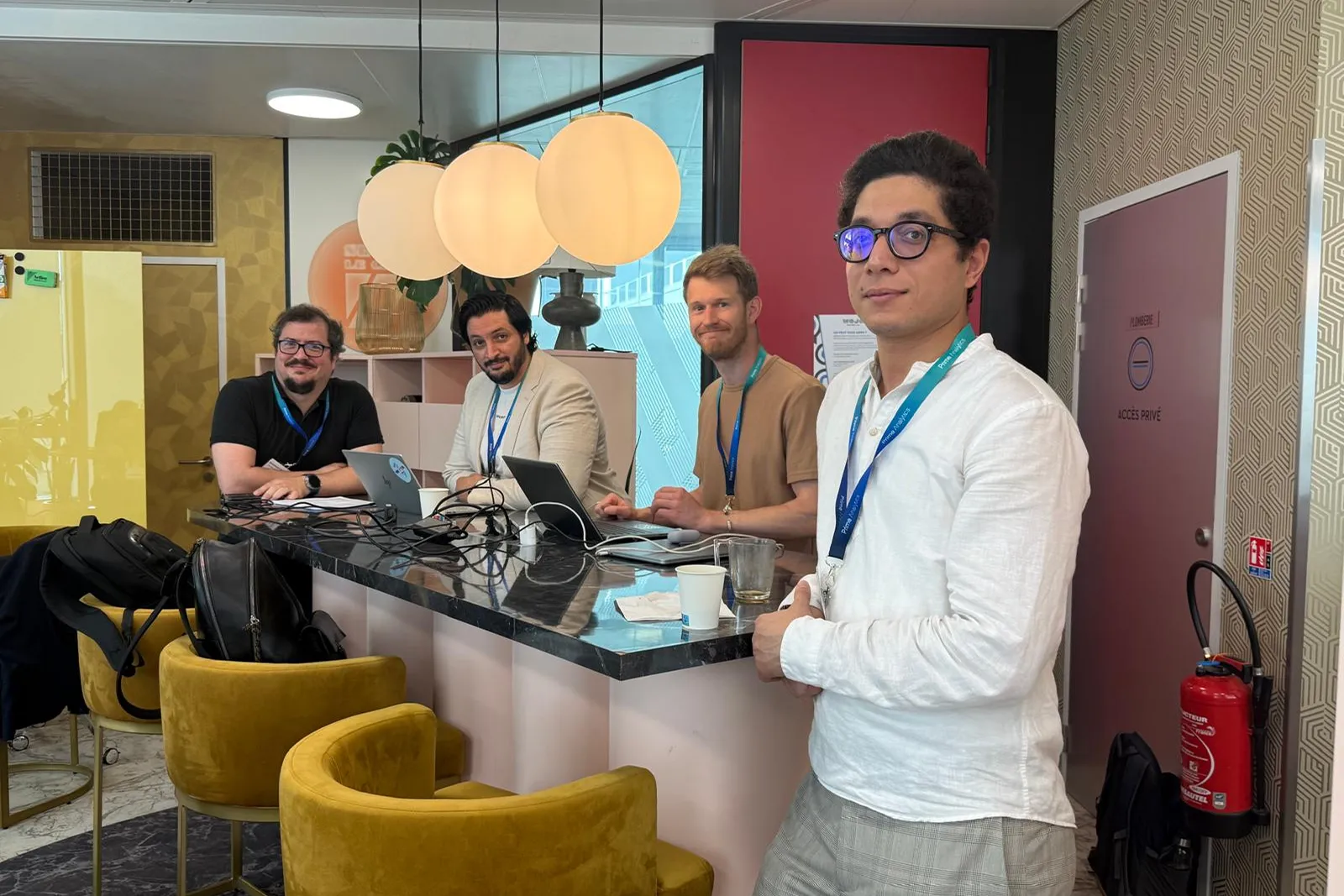
On June 23, 2026, we applied this method in a real-world context: the AI & Credit Masterclass that Prime Analytics co-organized with QuickSort, with the support of Alteryx and Finance Innovation.
23 decision-makers from Credit, Risk, Data, and Transformation departments — from BNP Paribas, Société Générale, Bpifrance, Mobilize Financial Services, RiverBank, S&P Global Market Intelligence, Provenir, B-Part Consulting, Ekimetrics — collaborated for a full day.
The process followed this method:
- • Morning: demystifying AI, mapping pain points, demonstration of two existing use cases (Credit Memo and Securitization)
- • Afternoon: collaborative prioritization workshop, followed by live development of three use cases between 2:40 PM and 4:10 PM
-
Outcome: three functional applications built in less than an hour and a half, with the audience watching — and asking questions. The next day, each participant left with ideas immediately applicable to their organization.
Overall participant rating: 9.7/10. Recommendation: 9.7/10. One participant summarized: “Excellent balance between theory and practice.”
7. Beyond prototypes, a transformation roadmapAn expanding AI glossary
An AI-Powered Development workshop doesn't just produce prototypes.
At the end of the day, each organization leaves with:
• A prioritized mapping of business pain points
• A prioritized list of AI use cases with value/feasibility assessment
• 2 to 5 functional prototypes developed live, immediately testable
• Consolidated business user feedback from the session
• A deployment roadmap with the first actions to be implemented within 30 days
This package is actionable from the following Monday — this is what distinguishes our method from a simple hackathon or a design thinking workshop day. You don't leave with just a poster and good vibes. You leave with applications and a battle plan.
In conclusion, it's not technology that changes organizations.
Our conviction, forged over ten years of Data & AI projects in banking: it's not technology that transforms organizations. It's the solutions devised by business units to address their specific needs.
Generative AI is a powerful accelerator. But it only has value if it tackles real business pain points, is developed in direct contact with users, and is industrialized with the same rigor as any production component.
AI-Powered Development is our way of translating this conviction into a method. In a single day, ideas become prototypes. Prototypes become a transformation roadmap. And transformation finally happens with the business teams, not despite them.
Want to test the method in your organization? We regularly organize tailor-made, in-house AI-Powered Innovation Workshops for Credit, Risk, Finance, Compliance, and Transformation departments.

We will get back to you as soon as possible.
Please try again or contact us at contact@primeanalytics.fr.